Measuring converter stack-up on a ZF 8HP swap
The dimension that decides whether your 8HP front pump survives the first drive, how to measure it, and what happens when it is wrong in either direction.
Parts referenced in this article
Most swap failures we get emails about are not machining failures. They are assembly failures, and a large share of those come down to one dimension nobody measured: how far the torque converter sits inside the bellhousing relative to the flexplate face.
Get it wrong in one direction and the converter never fully engages the pump drive. Get it wrong in the other and you preload the converter against the flexplate, push the thrust face into the pump, and destroy the front pump within a few hundred kilometres. Neither failure announces itself on the driveway.
What you are actually measuring
Two numbers, taken independently, then compared.
- Converter depth. With the converter fully seated - and “fully seated” on an 8HP means it has dropped through more than one engagement step - measure from the gearbox bellhousing mating face to the converter mounting pads. Rotate the converter and take the reading at several positions.
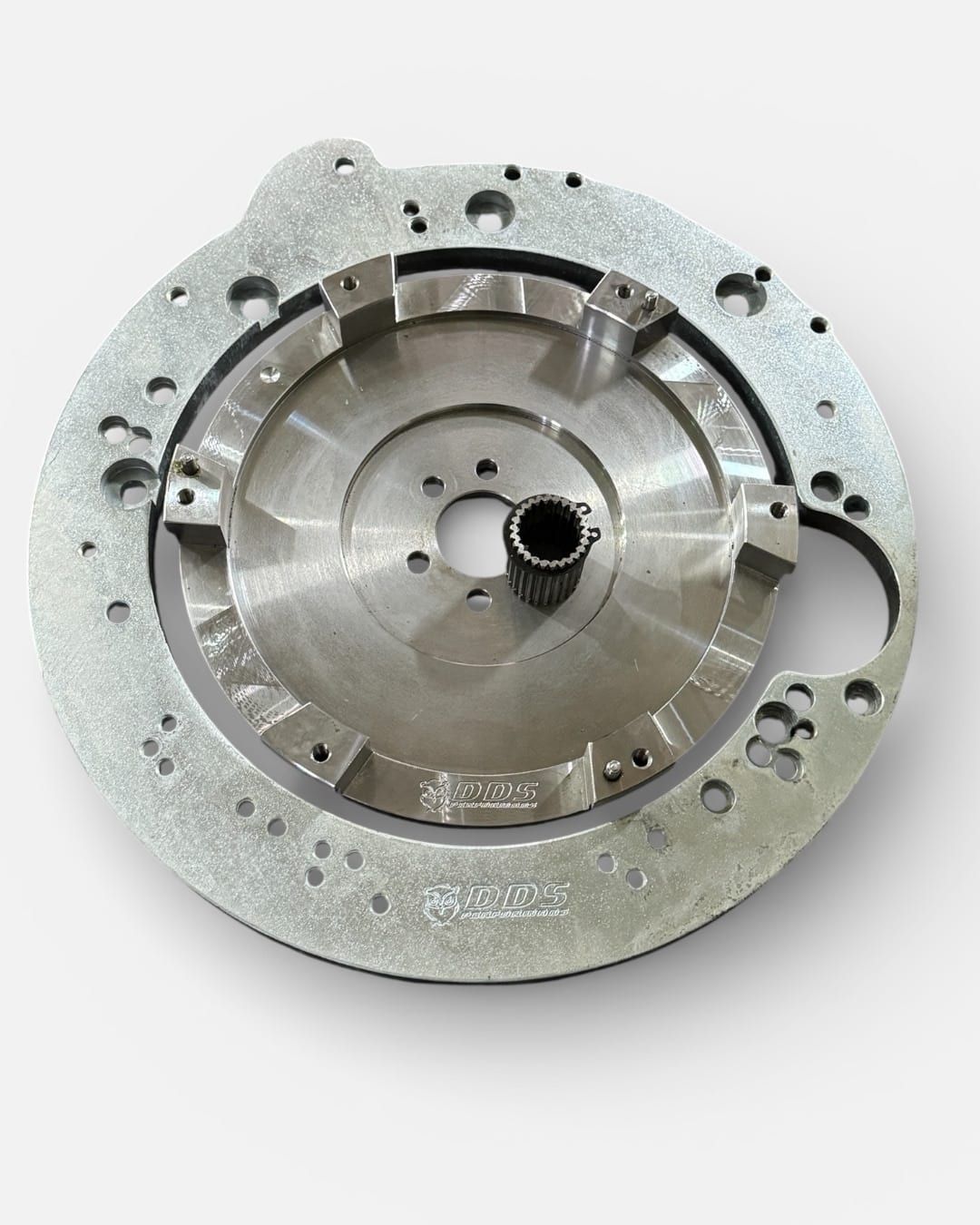
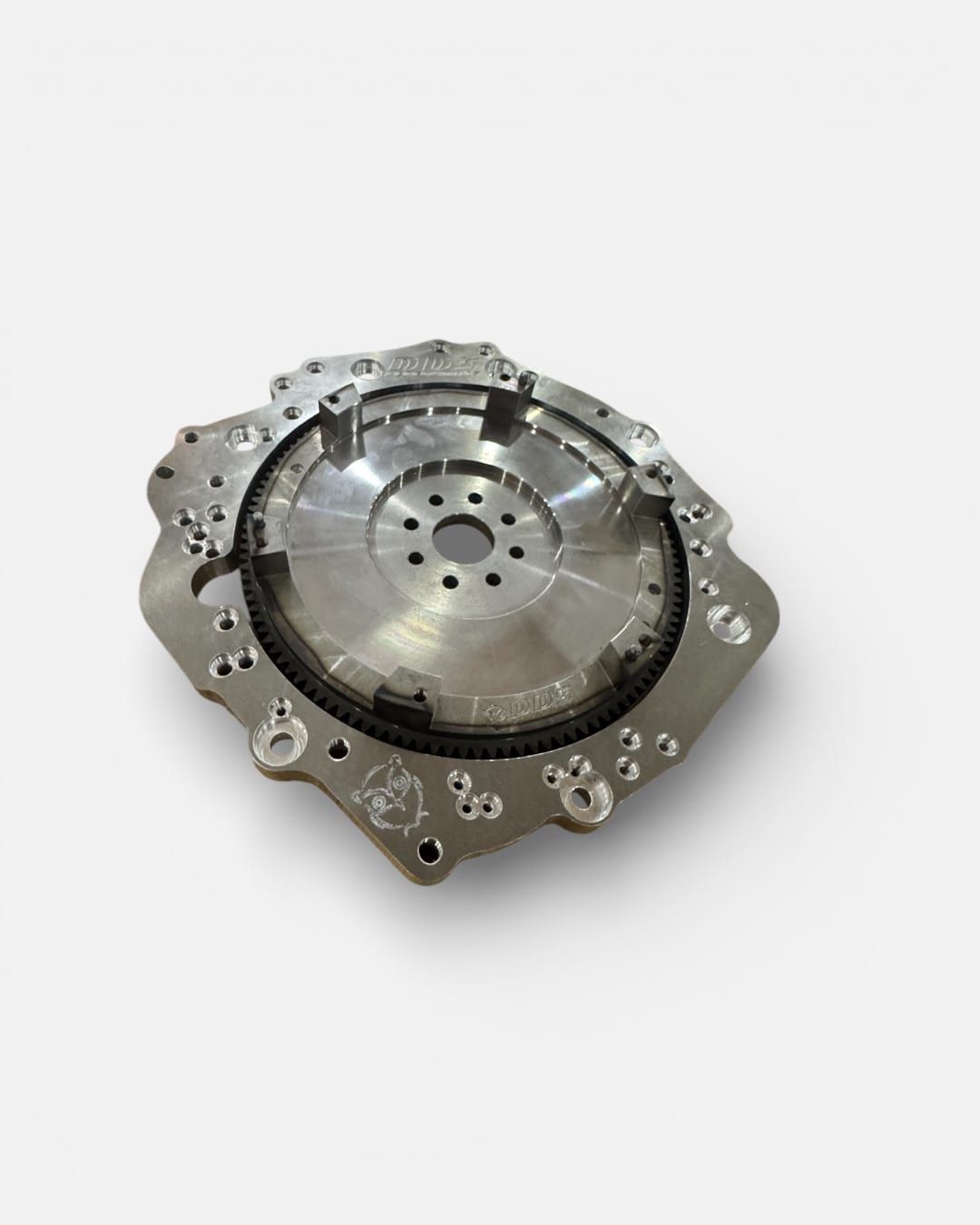
- Flexplate face position. With the adapter plate bolted to the engine and the flexplate torqued to the crank, measure from the adapter plate’s gearbox-side face to the flexplate mounting face.
The difference between those two numbers is your stack-up gap.
The number we publish
Each DDS 8HP kit ships with the target gap for that combination in the installation document.
Do not take a figure from another kit, another engine or a forum post. The adapter plate thickness, the flexplate design and the converter variant all feed into it.
Why we do not just say “a few millimetres”
Because “a few millimetres” is how front pumps die. The tolerance band is narrow enough that a stack of assumptions - a flexplate torqued in the wrong sequence, a converter that looks seated but is one step out, a plate measured with paint on the face - will walk you outside it without any single mistake being obviously wrong.
Measure it. Write the number down. If it does not match the document, stop and find out why before the gearbox goes on the mounts.
Before you bolt it up
- Seat the converter properly. Rotate and push until it drops through every step, then verify with the depth reading rather than by feel.
- Torque the flexplate in sequence, then re-measure. Fastener sequence moves the face.
- Check for paint, burrs or old gasket material on any face you are measuring from.
- Once the gearbox is mated, confirm the converter still rotates freely by hand before the bolts go into the drive pads.
If your reading is outside the published band, the fix is usually a spacing change, not force. Email us the two measurements and we will tell you which.
- ZF 8HP
- Torque converter
- Installation